How Mother’s Day Rates Against Other Holidays (According to Sales, SEO, and Strategy)
According to the National Retail Federation, Mother’s Day is the third largest retail holiday. On average, people spend over 20 million dollars every single year, and not all on candy or flowers. If we equate this per person, it would average out to over $150 each.
Mother’s Day appeals to a wide range of people (grandmas, moms, and daughters), and marketing messages tend to be more effective as a result. That said, it’s important to work smarter, not harder. Keywords are often overused (such as “Best Mother’s Day Gift”), so it’s important to be creative with your editorializing efforts – vary those keywords! Smart marketers and SEO strategists use the fact that many marketers are lazily using saturated keywords, to boost engagement levels by using niche, under-used keywords.
On average, about 30% of the population looks up retailer information for products. Most of the time, this demographic is generally younger people between the ages of 18 and 24. This means that it’s essential to use mobile to get millennial visitors. Totals associated with demographics continue to change, however. In 2015, 40% of adults aged 18-35 used their phone to research different products online.
You might think that viewers of your site love coupons, but this often isn’t the case. Statistics suggest that free shipping was the most important thing to buyers. Price cuts and coupons averaged less than 45% of total respondents, compared to 57% preferring free shipping.
85% of all adults between the ages of 18 and 44 have a smartphone and 1 in 4 buy all their gifts online. A tiny percentage of shoppers actually buy gifts a month or more before the holiday arrives (for example, in April or March).
Most people buy their gifts in the time frame between one week and 48 hours before the holiday (totaling about 50%). Americans spend most, but Canadians, French, and Europeans also spend over $40 per person.
The online marketing space is getting more and more crowded everyday. But with the right strategy in search advertising, you’ll be able to corner a portion of your market that your competition might not have tapped into yet. With the right online marketing strategy, you would be able to pull in more visits and see improved revenue.
For more information on getting more customers with a cutting edge online marketing strategy, contact Search Engine Pros today.
Finding the right customers on Google Shopping starts with your Merchant Center product feed: it contains all the information about the products you sell to help online shoppers find just what they’re looking for. But we know that creating and maintaining a complete and compliant data feed can be challenging. To make feed management easier, we’re excited to introduce Feed Rules, a self-service tool to help you transform your existing data from your inventory management systems into the format accepted by Google Shopping. Feed Rules helps you streamline your data feed uploads, whether you’re already running Shopping campaigns or you’re just getting started.
Use Feed Rules to set up and maintain your feed in Google Shopping format Feed Rules allows you to perform basic transformations of your existing product data — making it easier than ever to get your data feed up and running. You can export and submit your product data in your own format, and use different rules to transform it into product attributes and values that follow the Google Shopping feed specification, directly in Merchant Center:
Map your column headers to the attribute names supported by Google Shopping. For example, if you have an existing feed with the unsupported column header “main title”, you can set up a rule in Merchant Center to have it recognized as the supported attribute name, “title”.
Transform the values in your feed to values supported by Google Shopping. For example, to submit gender specifications for your products, you can transform the unsupported value “for women” in your existing feed to the supported value “female”.
Populate missing attribute values with a fixed value, or with different values based on conditional criteria. For example, if the “condition” attribute is missing and you’re only selling new products, you can set up a rule to have this attribute automatically set to “new”.
Once you specify new rules for a feed, all future uploads of this feed will be processed according to those rules.
Use Feed Rules to organize your data for campaign optimization You can also use conditional rules to better organize your data:
Implement rules for custom labels to structure your campaigns in new ways. For example, you can group products by price ranges or margins, then later bid differently on these groups.
Tag your products with a shipping label. For example, you can derive “heavy” from the category, label those products, and define a particular shipping cost for those items.
As we introduce the first version of Feed Rules, we’re eager to learn about even more use cases from you. Feedback and suggestions for this feature can be entered directly from your Merchant Center account by clicking the gear icon in the top-right corner of the page and selecting “Send Feedback” to let us know what you think.
Measuring the impact of online video is something of a passion for us at Google. It’s been three years since we unveiled Brand Lift for YouTube and brands have seen great success. But the last piece of the puzzle has been how does online video drive offline sales? This is particularly true for consumer packaged goods (CPG) companies, for which the vast majority of sales – over 90% – happen offline. Thanks to our new integration with Oracle Data Cloud – a leader in the emerging Data as a Service (DaaS) industry that measures the sales impact of digital media – we now have a solution to answer that question. Today we’re announcing the availability of sales lift studies in the US, for CPG advertisers using TrueView video ads.
The value of video
We’ve been testing this capability for a while, and have seen promising early results: 78% of TrueView campaigns we studied on YouTube showed an increase in offline sales, with 61% driving a statistically significant lift in sales of the advertised brand.1
To build this solution we worked with Oracle Data Cloud to develop the first in-depth application of their DLX ROI product on video formats, and we studied a range of CPG video campaigns running TrueView ads across food, health and beauty, beverage and homecare. We built this with privacy at the center, and no personal data is exchanged between the companies.
Early client successes
One campaign we measured, Gatorade’s “We Love Sweat,” earned $13.50 sales in return for every dollar spent on TrueView (return on ad spend, or ROAS). This stunning success was due in part to persistent branding and strong creative geared specifically for driving sales. Gatorade’s campaign was also interesting because it delivered a remarkable 16% lift in sales among new buyers that had seen the video vs. new buyers that had not – according to Oracle Data Cloud a typical lift in this metric hovers around 2.5%.
Similar to Gatorade, parent company PepsiCo also saw sales lift success with their campaign for Doritos. Not only did our DLX ROI solution show that their 30-second creative drove higher lift in sales among exposed households than a 15-second version, but they saw particular targeting techniques – namely topic targeting and remarketing – drove greater sales lift compared to a demographic target.
Mars also participated in our DLX ROI test for their Pedigree pet food brand, and the sales lift studies helped them make key creative decisions. They tested a video that opened with strong branding against one that saved their branding for the end, and learned that the video with strong upfront branding drove nearly 7x greater sales lift. As Laurent Larguinat, Global Director of Mars Consumer and Market Insights said, “With this new offering, YouTube is rounding out a full funnel measurement solution for video. We’re excited to continue to see these results for all of our campaigns.” This new sales lift offering drops the last piece into place for full funnel measurement of CPG campaigns on YouTube, and we’re excited to bring you new creative and media strategy insights that drive incremental sales as we scale these studies.
Pay-Per-Click or PPC is one of the most effective online advertising and marketing strategies to drive customers to your business. Among the providers of PPC advertising, Google’s AdWords is the most widely used platform. If used properly, PPC could bring in a significant number of highly targeted leads that convert into paying customers.
What is Pay-Per-Click?
Essentially, pay-per-click or PPC, is a way of buying traffic or visits to a website. One of the most popular forms of PPC is search advertising provided by Google AdWords in which the advertiser pays a fee whenever an ad is clicked.
In search advertising, PPC ads appear above the organic search results. The ads appear on relevant search results. So if a PPC ad is for “baby clothing”, for example, it would show in search results for the same or related keywords.
A PPC ad copy includes a short title, a description, and a link to a landing page. Some PPC ads may also have extensions. These are especially useful features that make your ad more relevant to the searcher.
According to Search Engine Watch, businesses make an average of $2 in revenue for every $1 they spend on Adwords. This is likely due to the fact that more and more people are using mobile devices, and mobile search now accounts for 52 percent of paid search clicks.
Organic Search vs. Pay-Per-Click
Optimizing your business for organic search is key to long-term success online. But trying to dominate a keyword in a competitive industry isn’t exactly a walk in the park, and it could take a few months to see significant results. But with PPC, you have a better chance of getting more clicks by leapfrogging ahead of the competition attempting to rank high in organic search.
Organic SEO campaigns take time. They require the help of a savvy digital marketing agency in order optimize your site so that you’ll start showing up in the organic listings. PPC is a quicker way to get awareness online. Think of organic SEO campaigns as a marathon, and a PPC campaign like a sprint. With PPC you need to pay every time someone clicks your ad. Google asks each advertiser to set a maximum cost per click they are willing to spend on each keyword (for each click).
If you have the budget and you need to get in front of as many customers as fast as possible, PPC can do that for you. Organic SEO, on the other hand, sets you up for long-term success online.
Now, let’s get right down to business. If you’re looking to explore PPC, the following are the five must-haves of a successful pay per click campaign:
The right set of keywords
Like organic SEO, PPC requires that you research and select a certain set of keywords. Keywords are the primary key to driving success to your PPC campaign. Be sure to use the proper set of keywords that exactly describe your business. Avoid using keywords with a high competition (high numbers of other advertisers targeting the same keyword). You need to use those with high search volume, but with low competition. Such keywords usually cost low.
The best free tool to use for your keyword research is Google’s very own AdWords Keyword Planner. It provides you with insights on keywords, competition, cost, and location targeting.
Ask us today about how we can help you dig deeper for keywords using our proprietary keyword software.
Emphasis on clicks
When running a PPC ad, you should focus mainly on the number of clicks (your CTR or click through rate), not on the number of impressions (the number of times your ad appears). This is because your PPC campaign’s costs are based on the number of times your ads have been clicked. Which is why you need to be sure that your ads have the most relevant or targeted keywords for maximum clicks and conversion. It is crucial to keep your ad on the first page with a strong bid, because 62% of search engine users click on a search result within the first results page (28% click on 2nd or 3rd page).
Intelligence: keeping an eye on the competition
If the competition seems to be outperforming your PPC ads, there’s probably a good reason. The best way to find out what they might be doing right is to use keyword software that ‘spys’ on them (this is totally legal, ethical and part of a comprehensive PPC strategy). Study your competition’s ad copy and make a shortlist of the highest peforming ads.
Ad Extensions
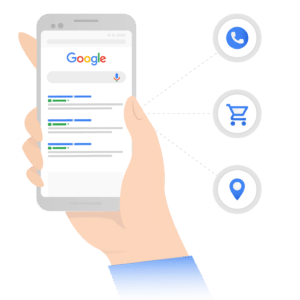
PPC ad extensions are excellent tools that compel customers to click on an ad. Extensions provide more information that potential customers may be looking for, such as your business’ phone number, customer rating, links to your webpages, and mailing address.
Below are some of the ad extensions in Google AdWords:
Sitelink Extensions – It displays additional links in your standard text ad
Call Extensions – It lets you add a phone number in your standard text ad
Callout Extensions – It shows additional descriptive text in your standard text ad
Location Extensions – It allows you to display location information in your standard text ads
Review Extensions – A review extension that displays an accurate, current, credible, non-duplicative third-party review of your business. Like the rest of your ad text, your review extensions must comply with all AdWords policies.
Use these extensions to give more reason for customers to click on your ads. They are great tools to increase your click-through rate and improve your conversion.
Performance tracking
Unfortunately, this is one area that many advertisers tend to take for granted. Performance tracking is essential for understanding how well your PPC ads and campaign are working. By taking a look at the performance of your ads, you would be able to make the necessary adjustments for improved performance. You’ll discover which set of keywords are driving more traffic and resulting in conversions, as well as which are performing poorly and should be eliminated.
The online marketing space is getting more and more crowded everyday. But with the right strategy in search advertising, you’ll be able to corner a portion of your market that your competition might not have tapped into yet. With the right PPC strategy, you would be able to pull in more visits and see improved revenue.
Google, leading the way yet again in technological innovation, continues to focus on making more concepts mobile friendly to gain a foothold on the consumer power present behind mobile applications and purchasing.
After all, what better way to welcome Spring other than learning of a new and cool list of mobile marketing opportunities from the edgy company?
Springtime announcements are becoming almost a tradition, mostly
focused on mobile advancements. This time proves to be no different, as new changes to mobile platforms via Google are the center focus of upcoming innovative announcements from the company.
It’s nice to welcome the warm weather and outdoor activities with the knowledge that some neat new mobile features are coming to our fingertips courtesy of Google.
It’s mobile-first these past few years for the company, but Google’s innovative ability to adapt its features to be mobile friendly help give it an edge over others, who often lag behind the mobile changes introduced by Google.
So, what can we expect this year?
With a mobile-first emphasized evolution, the SERP appearance continues to modify itself for the mobile opportunity. Next on Google’s list is molding paid ads to fit into the mobile concept. Google’s major announcement this Spring rolled out the red carpet for some innovative AdWords mobile features.
Below are some of new changes, and what to expect.
Ads on Google Maps
Following is a list that covers the latest and greatest features coming to Google. So, you’ll be educated and prepared when AdWords starts shifting, and ready to pounce on the marketing opportunity.
Google’s going to be ramping up its ads on its Google Maps application.
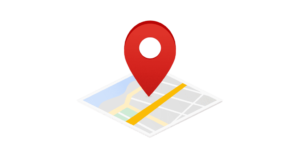
The updated version of Google Maps includes several more local search ads, which will be present in both the mobile and desktop versions.
Google.com itself will also display several more ads than it currently does. What’s nice for those marketing using Google AdWords is that brand logos, as well as company offers, will now be right on the map’s surface and much easier to see.
Plus, if customers click on the logo on the map, they’ll be taken to a local inventory ad format for the business. So not only will your ads be displayed on more apps, they will be much more clear for general marketing.
Doubling Headlines for Better Vision
If you are wondering, “Why Google Maps for more ads?” you are probably not alone. The answer comes from the sheer volume of users—more than a billion.
Within Google, searching for a location makes up about 33% of all the searches present on mobile devices. So Google will be using the location of the user to advertise about businesses that are near the customer while the customer searches for a destination and uses the map.
You’ve probably noticed there are no more right side appearances of Google AdWords.
The desire was to pull the appearance of Google together on all devices, rather than having anything seem broken up or offset. The text ads are now the next things set to evolve.
Headlines will increase to two 30 character headlines, replacing the current 25 character one headline version. Even better for advertisers using Google, Google found that this headline length brought up CTR by nearly a quarter.
There’s going to be an increase in the characters present in the description line as well. Right now, Google AdWords offers two 35-character description lines, which will increase to one 80-character line.
While five characters might not seem like much, the ads are certainly going to be bigger and more noticeable, which seems to promise much more clicks than the current version of Google AdWords
Monitoring In-Store Connections
AdWords brings the capability to measure the conversion from the customer that clicked on your ad in the mobile world to the person physically walking into your store. This prospect, although not completely new, will allow business owners to see how many people searched for your store, clicked on your ad, and then came to your store. While the feature exists, it is not standard, and Google plans to focus on making this capability general to all types of businesses.
Responsive Display Ads
If you are tired of making different ads for all the different formats in existence, you can breathe a sigh of relief. Google will allow you to create an ad that will adapt to the best format for you, depending on where it is being served. From there, all you will need to do is type in a URL, headline, description, and image, and Google will make that ad for you. So, you can kiss your ad headaches goodbye.
Device Bidding Updates
AdWords Bidding will become more user-friendly. You used to have to
setup a desktop bid, and mobile bids could adjust the base bid. And if you had a tablet, you were stuck with the desktop version no matter what. Now, you’ll be able to set bids via mobile, desktop, or tablet freely, and if they become dependent it is based on your choice. You’ll have a lot more control over your bidding.
Google-Centered Innovations
Google is one innovative company, and who can blame them? Their focus on mobile enhancement provides benefits for customers and advertisers alike, and many people are looking forward to the change.
As more people become more reliant on their mobile phones, the shift to mobile-centered features promises Google many happy and grateful consumers and advertisers.
When mobile users are looking for entertainment they often turn to game apps. In 2015, an estimated 41% of all apps downloaded were games.1 However, while a user may be excited about downloading an app, it can soon be forgotten; studies have shown that 1 in 4 installed apps are never used.
For game developers, building a successful business has often depended on an approach of acquiring as many users as possible, then trying to keep them engaged in the game as their interest wanes. While volume is important, it’s more important to find the right kind of user, who’ll open the app and keep on playing. That’s why today, at the Game Developers Conference (GDC), we announced a host of new features in AdWords and AdMob that make it simpler for developers to reach the right users at scale.
Let users try your app before downloading from Google Search We recently introduced Trial Run Ads on the Google Display Network which lets users stream your game from a display ad for your app before they download. In the next few weeks, we’ll extend these ads to search results on Google as a beta for selected U.S. advertisers. With Search Trial Run Ads, when a user searches for a game on Google, they can click ‘Try Now’ from within a search ad and try the app before installing it, similar to streaming apps from organic results. These ads will appear to smartphone users on WiFi, and the user can play for up to 10 minutes, then download the app in full if they choose. This format drives highly qualified users who are more likely to stay engaged with the app after install. Contact your Google representative to learn more about using this new format.
Showcase your game with portrait videos More than 80% of video ad views in mobile apps on the Google Display Network are from devices held vertically, but often, the videos are created for landscape viewing. Over the next few weeks, we’re launching Portrait Video Ads so users have a full-screen, immersive portrait video experience without having to re-orient their device. We’ve seen significant improvement in both click-through and conversion rates from game developers using Portrait Video, resulting in a much lower cost per install and a larger number of downloads.
Promote your app to game-lovers Advertisers have long been able to control who sees their AdWords ads, and in the coming weeks we’ll be launching even finer options to reach high-quality users with Active User Targeting for Games. This new type of targeting for Android apps can show ads to users who have spent more than 30 minutes playing games, or who have played a Google Play Games integrated game in the last 30 days. Game developers can show their ads to game lovers, and combined with other types of targeting, such as a particular game category (e.g., Adventure), they can reach a very precise audience.
Earn money from rewarded ads with AdMob Mediation AdMob helps app developers around the world earn through in-app advertising with best-in-class formats and smart tools to maximize revenue. Increasingly, rewarded advertising is becoming a popular form of game monetization: users are given the choice to engage with ads in exchange for in-app rewards. Today, we’re introducing a way for developers to easily monetize apps with rewarded video ads from a number of ad providers in AdMob Mediation. Supported networks and platforms include AdColony, AppLovin, Chartboost, Fyber, Upsight, and Vungle, with more being added all the time. So if you’re a developer monetizing with these providers, you can easily manage and optimize them through the AdMob interface. It’s part of our ongoing commitment to provide app developers with a first-class mediation solution, and follows our recent launch enabling SDK-less mediation.
We’re working closely with developers to innovate our ad solutions and help them build strong businesses. If you’re a game developer, come and meet with our ads teams at GDC at the Google booth between Wednesday and Friday, to discuss developing great games, growing your user base and earning more money. We’ll have a series of great talks in our booth mini-theater each day, and on Thursday morning we’ll be part of the main GDC sessions, with a discussion on user acquisition and monetization.
You’ve sent out the email invites, put a link on your web site and even made a post on your company blog. That’s plenty of promotion for your upcoming event, right? Not anymore! Lately, I hear more and more event planners becoming increasingly frustrated with event marketing in the web 2.0 landscape. Given the current economy, even savvy event planners are struggling to find sponsors and speakers. Below I will illuminate some best practices for event marketing with a particular focus on Internet marketing and online promotion.
Online promotion is a key aspect to planning an event nowadays. Without online promotion, no-one will know about your event and you will have no registrants, no attendees. This guide will cover event promotion, and provide insights on how to promote events online.
That said, here are some good starting questions to reflect upon:
Who is your target audience (including sponsors)?
Which online channels are they present on?
What is their concern that is being addressed by your event?
Below are the steps to follow in order to expand awareness for your event.
STEP 1: Keyword Research: Find 10 keywords to target. Try to find low competition, high search count keywords utilizing keyword research tools. Ask a web professional to develop a keyword research report for you.
STEP 2: Article Writing: Write 10 articles about your event (1 article around 1 niche keyword) 500 words each and use “Theme” Words.
STEP 3: Tags: Develop 10 Titles and 10 Descriptions for each page, and optimize each page for the search engines. Title can be 65 words or less, but more is okay. Try to include your important keywords in the beginning of the title. Write your event description with your target keywords in mind – not more than 250 characters. Write at least 3 tag keywords for each article. Now that you have a set of Titles, descriptions, keywords, you have a data set to use for social bookmarking submissions, directory submissions and link campaigns.
STEP 4: Event Directories: Go to the event directory web sites below, and register your event. This is a general list widely accepts most events. However, it’s also a good idea to do a Google Search in your town, and find local event directories online for your area. Submitting your event to various event directories doesn’t cost you any $. It only brings new delegates and helps you improve your Search Engine rankings.
Eventful – http://eventful.com Eventful will allow you to search, create, promote and track online events in your local area. Search by location or category to make it easy to find the events you want to attend. You can also keep track of your favorite events by added them to your calendar. Eventful will also all you to create a profile, group, and friends list to stay in touch with family, friends, colleagues or industry leaders. I love this service because they send an email every week to people in your area with the events that are about to happen.
Night Out – https://nightout.com NIGHTOUT has emerged as one of the most innovative and specialized event ticketing platforms on the web today, used by thousands of top event producers, promoters, and venues. This platform can give your event a good deal of exposure.
Meetup – http://www.meetup.com Meetup is probably the most mainstream event website on the web currently. Meetups niche is allowing people to create local groups and “meetup” at local establishments in the area. Their goal is to create an environment that is easy for industry people and groups to meet, interact, discuss, and share topics that matter to them. Create your own MeetUp group or join other groups. Sometimes, if your event is really interesting, administrators of other groups will be happy to pass the word to their members.
CitySearch – http://citysearch.com This local search engine is here to stay. It’s getting very popular and can make your event visible to thousands of people.
Eventbrite – http://EventBrite.com Eventbrite is another popular event site known for their easy to use online ticketing tools. Listing your event here is a smart idea because they have a large presence on the web and come up frequently when people search for local events.
STEP 5: Social Networking: Go to the social networking web sites below, and start generating a buzz around your event. Social Networking sites such as Facebook, LinkedIn offer numerous opportunities to promote any event. You can create & leverage a community (e.g. Facebook Page or LinkedIn Group) to promote an event or a conference. The status messages at these sites (particularly Facebook) can really create a powerful personal buzz & engagement in the target community. Lastly, the core team can use their own network (by sending event invites; e.g. on LinkedIn) to spread the word about the event. *remember to use your target keyword phrases when commenting and using your social network. (use your target keyword phrases!)
LinkedInhttp://www.linkedin.com Let all your contacts know about your event. In addition to that, you can join dozens of business networking groups based out of your city and post your event to their discussion boards.
Facebookhttp://www.facebook.com Use Facebook to find groups and people in your area, and invite them to your event. You can also use Facebook Ads and deliver them to people in a certain location.
STEP 6: Setup Event Blogs: Goto the following sites and setup free blogs. Every Friday, make a 300-500 word post about your upcoming event (use your target keyword phrases!) The blog is a very important part of a successful online marketing strategy. Not necessarily the traditionally-defined blog, but the ‘blog’ that has emerged from within the context of Web 2.0 as it exists today. Whether it’s a pre-event, during the event or post event, you can highly leverage both Blogging & Microblogging (e.g. Twitter). It’s a great idea to launch your event blog (may be even before your conference website) while you are launching the website/microsite for your event. In addition, you can leverage other relevant blogs (create blog badges like Proto did) to promote your events. Live conference blogging is a great tool to create valuable content for event promotion in addition to enriching the experience of the delegates. As a central platform, blog also helps you promote other social media channels & content (e.g. photos, videos, presentations, twitter).
WordPresshttp://www.wordpress.com Starting a wordpress blog about your event is both free and easy. There are thousands of templates out there for word press blogs. Managing the content for an event is extremely easy with WordPress.
HubPageshttp://www.hubpages.com Hubpages is another social network site that allows you to create a content online for free.
Blogger.comhttp://www.blogger.com This is one of the oldest free blog sites where you can post anything about anything. Start a free blog about your event, and post consistent updates 2-3 months prior to your event.
STEP 7: Social Bookmarking: Open up the document you made in Step 2 (10 titles, 10 descriptions, 3 tags each) Setup your free social bookmarking accounts. Every Friday, make a social bookmark using your target keyword phrases. Social networking websites are one of the best ways to promote to people. YouTube.com, Twitter.com, Facebook.com, Gather.com amongst hundreds of other sites are easy ways to generate a lot of buzz quickly. Plus, promoting your event via this outlet is generally free or low cost, so not only will you be able to publicize your event swiftly, but cheaply as well.
Here are the Top Bookmarking Sites
Top 15 Most Popular Social Bookmarking Websites | April 2016
Here are the top 15 Most Popular Social Bookmarking Sites which is a continually updated average of each website’s Alexa Global Traffic Rank, and U.S. Traffic Rank from both Compete and Quantcast.“*#*” Denotes an estimate for sites with limited data.
STEP 8: Video Marketing: Create a 30 second-60 second promo video about your event. This can be done easily in Microsoft Powerpoint, or by using Windows Movie Maker. Or you can go get a generic video from a stock video site and then load it in Windows Movie Maker to add a small intro and outro about your event. Video’s are a tremendous boost to search engine rankings, and will contribute to more trust and credibility at your web site. Video Tags, Video Title, and Video Descriptions can all be utilized to maximize your online marketing efforts. One of the benefits of internet advertising as opposed to traditional, physical advertising is the level of interactivity that can be reached at a relatively low cost. Technologies such as Flash have allowed marketing managers to include robust, high-quality audio and video in their advertisements without forcing consumers to suffer through long downloads or install third-party software.
Youtubehttp://www.youtube.com Put a Youtube video on your website about your event, and watch your ranking skyrocket. Another idea is to use Pay Per Click to drive traffic to your video page, which increases your Youtube Views, and your ranks on Youtube Search Engine.
Vimeohttp://www.vimeo.com Vimeo is a high quality HD video site that has been gaining popularity rapidly, especially in the film world.
Google Videoshttp://video.google.com Videos are excellent for helping boost organic rankings for your event pages. Upload your event related snippets to a free Google Videos Account and watch your traffic levels!
STEP 9: Online Press Releases: Online PR enables you to directly reach out to global audience but also help you increase your Search Engine rankings. Writing press releases and distributing them to television and radio stations, websites, specialized magazines, and newspapers is a great way to get your event promoted to a larger audience. Depending on whether or not your event is more localized or on a national or international level will determine which media to contact, but regardless of who it is it is a great way to have people read about your event. In addition to sending out press releases to the media, it is also a good idea to invite journalists to the event so that they can report on it and your event can receive publicity afterward.
STEP 10: CRAIGSLIST: Create a few posts on Craiglist and give away tickets with a coupon code. This is a particularly effective tactic because it drives groups of people to the event website, and expands awareness for the event via word of mouth.
STEP 11: Listing in Community Newspapers and Websites In addition to writing press releases and contacting media for publicity, simply listing your event in the “Community Events” section of local newspapers and on community websites is an effective way to reach your audience. Many people tend to read the “Events” section to quickly see what is going on and so this strategy works very well. Don’t be afraid to contact local newspapers and other publications to inform them about your event. In most cases, they will find this information useful and relevant, and they’ll be happy to share it with their readers. Journalists love writing about current events in the community.
STEP 12: Mailers: Sending event invites with postcard mailers is still a viable means of spreading the word about your event. However, more than the message, it’s the database of the recipients, which determines the success or failure of your email campaign. While signing up for media partners (who promise to send your event mailer to their database), don’t just be enticed by the volume of their database – relevancy of their member base is much more important. Sending your mailer to the wrong audience can be a huge waste of time and money. Consider an urgency angle with your advertising, for example, consider these two headlines: ‘MY EVENT’ or ‘7 Days to MYEVENT- Join Now!’ (can you guess which ROI is better?)
STEP 13: Leveraging Content (Photos, Presentations, and Videos etc): Even today, most of the events don’t last beyond the day on which they happen. As such, there is an amazing opportunity to leverage the event content (in the form of session takeaways (an important reason for live blogging), photos, presentations, videos) to promote the event & the organizer’s brand – this can significantly contribute to the next year’s conference or other conferences by the same organizer. So, please plan to capture and use the wealth of content which gets created during the event. For e.g. Social Media Channels – Speaker Presentations, Event Photo Galleries, Session Videos have driven thousands of views for various events.
STEP 14: Sponsors The relationship with your sponsors is incredibly important when organizing a good event. While you help your sponsors by promoting them to your event attendees, they can also assist in promoting your event. This can be done on their website, in store by displaying fliers and posters, and even through their newsletters and mailings. Sponsorship is a two way street and can be very effective in promoting your event to people that would be interested in attending.
STEP 15: Word of Mouth Simply put, talk about your event with others. Information spreads rapidly through people talking with each other. Individuals are more likely to attend an event if their friend is going and speaks highly of it. It is important to make your event sound interesting and unique when talking about it with others so that they will in turn pass the information along and get more people to want to come to the competition. “Word of mouth” marketing, i.e. the water cooler effect, is very poweful and is often ignored during event planning. If an influential person at a company or in a group likes something, they will tell their friends. So, create ways to influence the influencer. Reach employees while they are at work with special offers for entertainment events looking to move distressed inventory or special VIP packages. One common influencer strategy is to host a group of our most influential customers and treat them to the event for free during the early stages of the event and an off night where the tickets would have gone dead anyway. By turning what would have been a lost opportunity (a seat that would not sell) into a marketing tool, you have the opportunity to influence many influencers who then share their experience with employees at their corporation or group, thereby generating word of mouth publicity.
STEP 16: Email Signature: Update your email signature to include a blurb and a link to the event (especially effective for the sales and marketing folks)
STEP 17: Email Auto Responses: You’re going to be out of the office this week, but still need a few more registrants. How about adding a link to your email auto response? Something to the tune of “I am currently out of the office and will return Friday 5/4. I hope you can join us on May 8 for our upcoming Webinar titled “How to Create a Successful Email Campaign.” Register Today!”
STEP 18: Vanity URLs: If the URL for your event registration is long and confusing, create a short “vanity” URL that will redirect people. Make it something you can easily write down if you want to jot it on a business card, flyer, napkin, etc.. Traditional media (including a pen and paper!) can still work in your favor even if it’s an online event
STEP 19: RSS Feeds: You’ve added a post to your blog about the upcoming webinar or event, but consider adding an extra push just to the RSS feed as the event gets closer.
STEP 20: Instant Messenger: Love it or hate it, instant messengers exist in the workplace. Make yours work for you by adding a short promo in your “status” message.
STEP 21: Find People with Lists: I can guarantee that there are at least 100 people in your area that have email lists of other people in your area. Offer them an incentive –sometimes it’s not even necessary, and ask them to let people know about your event through a blog post, a short announcement in their newsletters or a simple email. Offer them a small incentive, like a free ticket perhaps.
STEP 22: Do a Google Search: If you live in New York, search on Google for “New York Events”. There are hundreds of niche-websites that revolve around events in local area; they can give your event great exposure. Try these as well:
STEP 23: Event Posters: Get signs or banners up at the venue space. Posters should match all direct mail on online media
STEP 24: Print up invite cards, or ticket: A hard copy on paper works the best. “You are invited” or “VIP Invite” Email invites can supplement your efforts.
STEP 25: Sponsor Mini Events: One cost-effective way to raise awareness about your event is to simply go on-site to organizations and companies and create a fun afternoon focused on the events you promote. Raffle off tickets to the events to generate awareness amongst hundreds or thousands of potential consumers.
STEP 26: Event Evangelism: When talking about your event to potential buyers, talk about the experience they’re going to have as opposed to standard promotional talk. Many times you will need to completely re-write copy given to to you from the event because you want it to talk to the customer in a way that helps them understand the experience. Customise the copy to talk to the target audience-get inside the conversation in their head. For example, if your event promotes a Broadway star who isn’t in the mainstream media, you might consider shifting your focus to place more attention on the storyline if the crowd isn’t theater savvy. You should remember that interest and attendance is really driven by demand. Don’t get wrapped up with thinking the event is “great” and then not understanding why no-one is coming to it. Another really good approach if it is an event that is going on over many weeks or more or one that may be yearly is to survey the audience and understand clearly what folks like and what they don’t. Have the objective to really understand the demographics of the people who respond positively and negatively so you can constantly tweak marketing to focus on the people who are most likely to show up. Most events have a budget and large or small, a focused approach using data and analysis will help maximize the marketing dollars spent. The above is mostly for longer running events, but there are ways to adapt the above to a one-day or shorter event. To do that, you want to generate word-of-mouth selling around the anticipation of the event or the “buzz” of the event. This is a tougher as you are relying on the event topic or presenter to hold the event. Bottom line you should try to spend the time really creating the value proposition and focusing intently on your target audience.
It is important to remember that while these all are very effective ways to promote your events, it is usually necessary to mix these tactics to reach your target audience. Also, be sure your event software has promotion tools like email marketing to previous attendees. I hope this guide to event marketing online has helped you develop a better understanding of event marketing and promotion.
People constantly move between devices throughout the day — reading breaking news on their smartphone, watching a viral video on their tablet, or researching a beach vacation on their laptop. This creates a challenge for marketers: how do you find the right person at the right moment? Google’s audience solutions help marketers reach people based on the things that matter to them using insights from millions of websites and apps on the Google Display Network and billions of daily video views on YouTube. Whether you’re a business looking to build your brand or drive sales, we can help you deliver relevant messages to people at each stage of the path to purchase. Here’s how businesses can find the right audience with Google display and video ads:
Demographics – Reach customers within demographic groups you choose — including age, gender, and parental status. For example, a brand running a promotion for back-to-school backpacks can reach moms 25-34 years old.
Affinity audiences – Drive brand awareness and engagement by reaching people who have interests relevant to your brand. For example, a sportswear brand can reach outdoor enthusiasts to announce its new line of hiking apparel.
Custom affinity audiences – Drive consideration with an audience tailored precisely for your business. For example, a company that produces a soccer video game can reach fans of specific soccer clubs.
In-market audiences – Drive qualified traffic by reaching customers actively researching and intending to make a purchase. For example, a consumer electronics manufacturer can reach customers actively shopping for cameras.
Each month, AdWords advertisers worldwide run hundreds of thousands of campaigns using these audience solutions. Ford New Zealand, one of these advertisers, used Google’s audiences to drive more car shoppers to its website. Ford wanted to reach auto enthusiasts and raise brand awareness for its vehicles, so it used affinity audiences. The automaker also wanted to reach individuals actively researching and considering the purchase of a new vehicle, so it used in-market audiences. By using these solutions as well as dynamic remarketing, Ford drove a 60% increase in site visitors and tripled the amount of time spent on its site.
“Google’s audiences let us reach customers at each stage of the path to purchase, which helped us drive more qualified customers to our website and increase leads,” said Ford New Zealand’s general manager of marketing, Cameron Thomas. Read more here.
Marketers can achieve results like these because of three things unique to Google:
1. Deep consumer insights based on many touchpoints Google’s audiences are built using data from millions of websites and apps — including properties like YouTube that reach over a billion users. This gives us a wide range of contexts — reading hotel reviews, browsing homes on a real estate app, watching car videos, and more — to understand what people care about. Users can control their experience so they’re more likely to see useful, relevant ads.
2. Ability to distinguish between people’s passions and purchase intent We classify the millions of websites and apps on the GDN using machine learning, separating those that indicate “passion” from those that indicate “intent.” This enables you to connect with customers at the right stage of the path to purchase based on the types of websites and apps people visit. For example, if you’re an electronics brand looking to drive awareness, you may want to reach people who browse electronics blogs and videos to satisfy their passion for gadgets. But if your goal is to drive sales, you may want to reach people who are researching high-definition televisions on price comparison websites.
3. Real-time data that’s always fresh AdWords updates audiences in real-time, adding new information each time an ad is shown and removing information that no longer reflects people’s current interests. This is important for your ads’ performance, since a person who shops for a plane ticket today may no longer need one tomorrow. Or a person who is an aspiring chef this winter may find a new all-consuming passion for the outdoors in the spring.
To help even more marketers reach their audiences, we’ve also made these solutions available globally on YouTube and DoubleClick. Whether your goal is building your brand or driving sales, Google’s audiences help you reach the right people at the right moment across millions of websites and apps.
Your logo should grab your customer’s attention with color and design. Get a logo from Search Engine Pros and make your business memorable. A professional logo will help you stand out from the competition. Search Engine Pros will help you kick your design from 1999!
We’ll help you design a high-quality, professional logo that matches your preferences, business and style. Image matters. And having a professionally designed logo is the first step in web branding.
Your Logo. Your Style.
Give us 3 to 5 business days and we’ll give you an eye-catching, professionally designed logo. If it’s close, but not quite perfect — don’t worry. Your designer will make your adjustments and send you a final version for approval. Once you’ve approved your new logo, we’ll send you:
A high-resolution JPEG
A PNG with a transparent background for online use
An editable, print-ready PDF, suitable for any professionally printed materials
A vector-based EPS, also suitable for any professionally printed materials
Add it to t-shirts, jerseys, aprons, or any other apparel.
Have you ever wanted to make changes to your AdWords campaigns, but wanted to understand whether those changes will help you reach your business goals? Over the next few weeks, we’re rolling out campaign drafts and experiments to help you test changes to your campaigns, easily measure results, and apply the changes that are working well for your business.
Use drafts to stage your changes
Drafts let you prepare and review multiple changes to an existing campaign before implementing them. For example, let’s say you want to increase mobile bids for ad groups with strong mobile conversion rates. You can create a draft of your campaign and set different mobile bid adjustments for those ad groups — without impacting your campaign. If you’re happy with the changes in your draft, you can apply them directly to your original campaign.
But how do you know if those mobile bid adjustments will help you reach your business goals?
Run an experiment
Experiments let you test changes to your campaigns in a controlled environment. Let’s say you want to see how your new mobile bid adjustments perform compared to your original settings. First, create a draft with your new mobile bid adjustments. Then, create an experiment from that draft to test those changes against your current bidding strategy. You decide how much traffic (and budget) to split between your experiment and the original campaign, and how long you’d like the experiment to run.
Measure your results
An essential part of running a successful experiment is understanding how your changes are impacting your business goals. For example, measuring the uplift in conversions can help you understand whether your new mobile bid adjustments are resulting in a better return on investment.
With campaign drafts and experiments, you can monitor results in two convenient ways to understand whether your experiment is driving the desired outcome:
Compare performance with the reporting scorecard. The performance scorecard has icons that highlight whether the experiment’s metrics are higher or lower than the original campaign, and whether or not the differences are statistically significant.
Evaluate ad group level performance for deeper insights. Sometimes individual ad groups are responsible for significant shifts in overall campaign performance. Monitor ad group-level metrics to understand how each ad group is impacting your campaign.
If you’re happy with the results of your experiment, you can quickly apply the changes from your experiment to your original campaign, or convert your experiment into a brand new campaign.
Testing with success
Customers like Red Ventures and The Honest Company are using campaign drafts and experiments to test and apply new campaign strategies at scale.
“Campaign drafts and experiments have revolutionized testing for our Fortune 500 clients. The tool streamlines the test creation, analysis, and implementation process. We can now launch more powerful tests in a fraction of the time that it took to manually duplicate campaigns and ad groups. The new scorecard allows you to confidently measure the impact of your tests and implement them in a single click if they’re successful.” – Jeremy Mayes, Vice President of Marketing, Red Ventures
“We have multiple conversion types with varying levels of customer lifetime value. Campaign drafts and experiments let us test new bidding strategies with a quarter of our campaign traffic, and the reporting scorecard let us easily measure the impact on the different types of conversion values. In the past, a test like this would require massive changes to the account. The new streamlined process lets us quickly test new bidding strategies until we find the one that best fits our complex business model.” – Josh Franklin, Search Account Manager, The Honest Company